



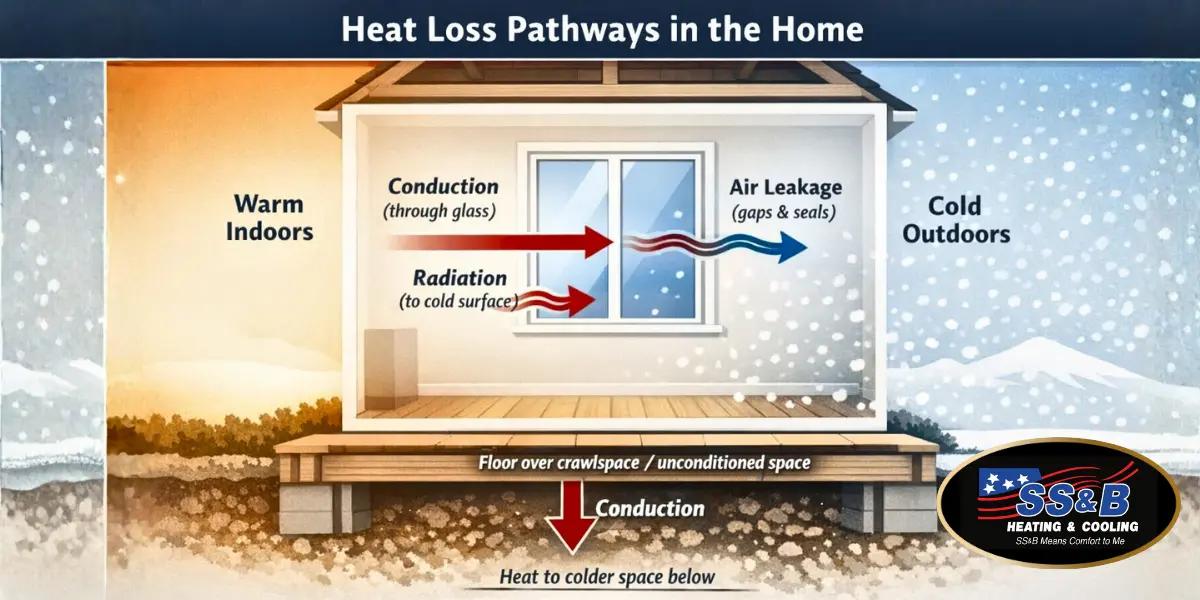
Heat loss pathways in a home. Heat naturally moves from warm indoor air toward colder outdoor surfaces through conduction, radiation, and air leakage.
🕒 Read Time: 6 to 7 min
A practical look at how heat moves, escapes, and affects comfort inside your home.
Hidden Sources of Heat Loss in Homes
If your home never seems as warm as it should in winter — even with the furnace running — you’re not alone. Many homeowners across Springfield and the surrounding Ozarks assume the heating system is the problem, when in reality heat is quietly escaping through places most people never think to check.
Homes in southwest Missouri face a unique mix of challenges: cold winter winds, big temperature swings, older housing stock mixed with fast new construction, crawlspaces, vented attics, and countless wall and ceiling penetrations. All of that adds up to comfort problems that can’t be fixed by simply turning up the thermostat.
The place this heat loss most often begins is also the most familiar one — the windows.
Let’s take a walk through the most common (and surprising) places homes lose heat, why it happens, and what actually helps.
How Windows Lose Heat
When it comes to heat loss, windows deserve the first look — especially in Springfield-area homes where winter winds and temperature swings are common. From a thermodynamics standpoint, windows lose heat primarily through conduction and radiation.
Heat naturally moves from warm areas to colder ones. In winter, indoor heat transfers directly through window glass by conduction and radiates toward the colder exterior surface. This is why sitting near a window on a cold night can feel uncomfortable even when the thermostat says the room is warm — your body is losing heat to the cold glass.
Many homeowners don’t realize how much heat is lost through the glass itself. Most assume window problems come only from leaky seals or poor caulking, without realizing that heat is continuously transferring right through the glass. On top of that, frames, seals, aging caulk, and installation gaps allow cold air infiltration, compounding the problem.
Fix: On very cold nights, close curtains or insulated shades to add another layer that slows heat transfer and reduces drafts. Longer-term improvements include sealing exterior caulk, refreshing weatherstripping, sealing interior trim gaps, and ensuring window locks pull sashes tight.
Crawlspaces — Even in New Homes
Crawlspaces are one of the largest sources of heat loss we see locally, including in brand-new construction. Many homeowners assume a new home automatically means a tight building envelope, but crawlspaces are often minimally insulated, poorly sealed, or treated as an afterthought.
From a thermodynamics perspective, an uninsulated crawlspace becomes a cold reservoir beneath the home. Heat moves downward through the floor by conduction while cold air circulating below continually pulls warmth out of the living space above.
Fix: Proper crawlspace insulation is critical. Insulating crawlspace walls or the floor above slows heat transfer and keeps cold air from acting as a constant drain. Sealing vents, rim joists, and gaps further improves comfort and efficiency.
Wood and Tile Floors That Look Beautiful but Feel Cold
Hard-surface flooring is popular throughout the Ozarks, especially in kitchens and living areas. While wood and tile floors look great, they provide far less insulation than carpeted surfaces. These materials have higher thermal conductivity, allowing heat to move through them easily.
Cold floors are the result of conduction and radiant heat loss. Heat flows from warm indoor air into the colder floor surface, making rooms feel colder even when air temperatures are adequate.
Fix: Floors need insulation underneath. Insulating the crawlspace or basement ceiling prevents floors from acting as a heat sink. Air sealing between the subfloor and framing also helps. Without insulation below, thermostat adjustments won’t solve cold floors.
Exterior Wall Electrical Outlets
Exterior wall electrical outlets are a surprisingly common source of heat loss. Each outlet requires a cut through an insulated wall cavity. If the electrical box isn’t sealed, cold outdoor air can move freely into the home.
Windy winter days make this especially noticeable, with homeowners feeling cold drafts near outlets without realizing the source.
Fix: Foam gaskets behind cover plates and air-sealing the electrical box reduce airflow. Child-proof outlet plugs can also help block drafts while adding safety, regardless of whether children live in the home.
Ductwork in Attics and Crawlspaces
Ductwork is meant to deliver warm air, but when it runs through unconditioned spaces like attics or crawlspaces, heat can be lost before the air ever reaches the room. Many older homes use uninsulated hard metal ducting, which transfers heat outward by conduction.
Uninsulated floor boots — the metal boxes connecting ducts to floor vents — are another major loss point. These boots often sit directly in cold crawlspace air, allowing heat to radiate away before entering the room.
Fix: Ducts in unconditioned spaces should be insulated and sealed. Older hard-pipe systems benefit from insulation wrap or replacement with insulated ducting. Floor boots should also be insulated and air-sealed so heat reaches the living space.
Attic Leaks and Penetrations
Warm air naturally rises, making the attic one of the most critical areas for heat retention. Light fixtures, wiring penetrations, attic hatches, and plumbing vents create direct escape paths for heat.
Fix: Sealing attic penetrations and ensuring proper insulation levels dramatically reduces heat loss and improves comfort throughout the home.
Kitchen Range Hoods and Bathroom Exhaust Fans
Kitchen range hoods and bathroom exhaust fans are necessary for ventilation, but they also remove heated air from the home. When they run, they create negative pressure, pulling cold outdoor air inside through gaps and cracks.
Uninsulated exhaust ducts running through attics lose heat rapidly, and without backdraft dampers, cold air can fall back down the duct when fans are off.
Fix: Exhaust ducts should be insulated in unconditioned spaces and equipped with effective backdraft dampers. Sealing fan housings further reduces unwanted heat loss while still allowing proper ventilation.
Chimneys and Fireplaces
Fireplaces and chimneys can be a quiet source of heat loss even when not in use. Warm air rises and escapes up the chimney, pulling cold air into the home to replace it.
What to Know: Closed dampers are rarely airtight. Homeowners often use removable chimney draft blockers or flue plugs when fireplaces are unused. Glass fireplace doors may also help reduce airflow. Any product should be designed for fireplaces and removed before use, following safety guidelines.
It’s Not Just the Furnace
When a home feels cold, the heating system often takes the blame. In reality, comfort depends just as much on how well a house holds onto heat.
Addressing hidden heat-loss points improves comfort, reduces system strain, and often lowers energy costs. If your home struggles to stay warm, it may not need a bigger system — it may simply need fewer places for heat to escape.
Pairing good air sealing and insulation with the right equipment also matters. Learn more about Trane’s TruComfort™ variable-speed technology and how it helps maintain more consistent indoor temperatures.
According to the U.S. Department of Energy, uncontrolled air leaks can let conditioned air out and cold air in, making homes less comfortable and less energy efficient.
For homeowners in Springfield, MO, and the surrounding Ozarks, understanding where heat loss happens is the first step toward real, lasting comfort.
About Us
At SS&B Heating & Cooling, we’ve been helping homeowners in Springfield, Missouri and the surrounding Ozarks stay comfortable for decades. We believe real comfort starts with understanding how a home works as a system — not just the heating equipment, but how air, insulation, and construction details affect the way a house feels day to day.
Our approach focuses on practical, real-world solutions based on what we see in homes throughout our area. Whether it’s improving comfort, efficiency, or long-term reliability, our goal is to help homeowners make informed decisions about their homes — without pressure and without guesswork.
Join the SS&B Comfort Club
Enjoy peace of mind with our Comfort Club Maintenance Plan. Members receive seasonal tune-ups, priority scheduling, and exclusive discounts that help prevent costly repairs and keep your HVAC system running efficiently all year long.
Learn MoreCall us to stay warm and safe! 417-866-0990, on online form. We're here to assist you!
Frequently Asked Questions
Misconceptions About Heat Pumps
How to Choose the Best Thermostat for Your Home
Will Air Conditioning Lower Humidity?

