How to Precool Your Home During a Springfield, MO Heatwave
Read Time: 5 min.
Precooling your home can help your AC handle extreme Springfield heat. Learn when it works, how to do it, and when your system may need service.
Can Precooling Help Your AC Keep Up in Extreme Heat?
When temperatures climb into the upper 90s or above 100°F in Springfield, even a properly working air conditioner can run for long periods. Older systems may struggle more during the hottest part of the afternoon. One strategy that can help is precooling your home overnight and early in the morning, before outdoor temperatures peak.
Precooling won’t fix a mechanical problem or an improperly sized system, but it can help your home start the day cooler and slow the rate at which indoor temperatures rise.
What Is Precooling?
Precooling means lowering your home’s temperature before the hottest part of the day begins. Your AC has an easier time removing heat when outdoor temperatures are lower. Cooling the home earlier also lowers the temperature of walls, floors, furniture, and other surfaces, creating a thermal buffer that can help the house stay comfortable longer.
How Much Should You Lower the Thermostat?
You don’t need to make the house unusually cold. For many homes, lowering the thermostat 2 to 4 degrees below your normal daytime setting overnight or early in the morning is enough.
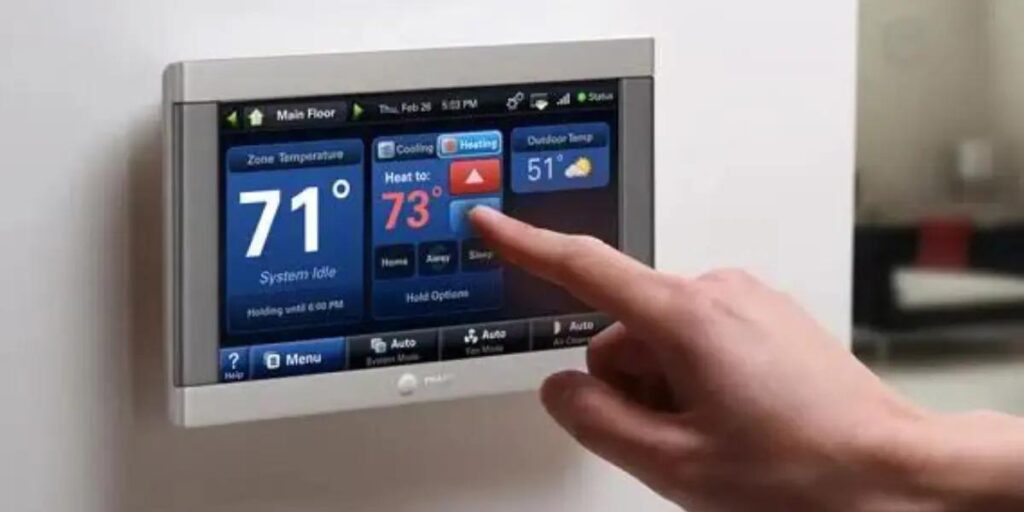
If you normally keep the thermostat at 75°F, you might try cooling the house to around 71°F to 73°F before the hottest part of the day, then allow the setting to rise gradually. If the system runs continuously all night and still cannot reach the lower setting, don’t keep pushing it colder. That may indicate the system is already struggling.
Should You Turn the AC Off at Night?
In Springfield’s humid summer weather, generally no. Opening windows may bring in cooler air, but it can also bring in a lot of humidity. Your air conditioner removes moisture as it cools, so letting humid outdoor air into the home can make it feel sticky and give the AC more work the next day. During hot, humid stretches, keeping windows closed usually works better.
Start Early
The best time to precool is before outdoor temperatures begin rising quickly. A programmable or smart thermostat can automatically lower the temperature during the early morning hours and then gradually return to your normal daytime setting. That gives the system more time to cool the house under easier conditions.
Keep the Cool Air Inside
Once the house is cooled down, the goal is to slow heat gain. Keep doors and windows closed during the hottest hours and use blinds, curtains, or shades, especially on south- and west-facing windows. Blackout curtains or insulated window coverings can make a noticeable difference in rooms that receive strong afternoon sun. Weatherstripping around doors and windows can also help reduce hot air leaking into the home.
Avoid Adding Heat Indoors
During extreme heat, try to limit activities that add heat inside the house. Use the oven, clothes dryer, and dishwasher during cooler morning or evening hours when possible. Microwaves, slow cookers, air fryers, outdoor grills, and cold meals can all reduce indoor heat buildup during the afternoon.
Use Fans for Comfort
Fans don’t lower the actual room temperature, but they can make you feel cooler by increasing evaporation from your skin. Ceiling fans should generally rotate counterclockwise when viewed from below during summer so they push air downward. Turn fans off when you leave the room because they cool people, not empty spaces.
Keep Airflow Open
Avoid closing a large number of supply vents in unused rooms. Doing so can increase pressure in the duct system and reduce airflow through the equipment. Keep supply and return vents open and make sure furniture, rugs, curtains, or boxes aren’t blocking them.
Check the Filter
A dirty air filter can reduce airflow and make a struggling system work harder. Check the filter regularly during heavy summer use and replace it when it becomes dirty. The exact schedule depends on the type of filter, pets, household dust, and how much the system runs.
Keep the Outdoor Unit Clear
Your outdoor condenser needs airflow to release heat. Keep grass, weeds, leaves, and shrubs away from the unit and never cover it while it is operating. If the outdoor coil is heavily dirty or clogged, professional cleaning may help restore performance.
Precooling Works Best in a Well-Insulated Home
Homes with good attic insulation, sealed ductwork, efficient windows, and less air leakage usually hold a precool longer. If your house warms up very quickly once the sun comes out, insulation or air-sealing improvements may provide more long-term benefit than simply lowering the thermostat further.
What About Smart Thermostats?
A smart or programmable thermostat can make precooling easier by handling the schedule automatically. It can lower the temperature in the early morning and then raise it later in the day without you having to make adjustments manually. Just remember that a thermostat cannot correct a mechanical problem, poor airflow, or improper system sizing.
Could Precooling Increase My Electric Bill?
It depends on how aggressively you use it. Lowering the thermostat dramatically for many hours may increase energy use. A modest 2- to 4-degree precool is usually a better starting point. It allows the system to do more cooling during the easier part of the day without trying to make the house excessively cold.
What If My AC Runs Constantly During the Afternoon?
Long run times during extreme heat are not automatically a problem. When Springfield temperatures approach 100°F, a properly sized system may run almost continuously while still maintaining the indoor temperature.
The concern is when the home continues getting warmer even though the AC is running. Possible causes include dirty filters or coils, low refrigerant, airflow problems, duct leakage, equipment problems, poor insulation, or incorrect system sizing. If your air conditioner is running but not cooling properly, read our guide on when you should shut off your AC if it’s not cooling.
When Precooling Won’t Solve the Problem
Precooling is a comfort strategy, not a repair. Call for service if you notice warm air from the vents, ice on refrigerant lines, unusual noises, water around the indoor unit, weak airflow, repeated breaker trips, or indoor temperatures continuing to rise significantly. If you’re waiting for service during extreme heat, see our guide on ways to stay cool while waiting for air conditioner repairs.
What If Your Older AC Just Can’t Keep Up?
An older system does not automatically need replacement because it struggles during one exceptionally hot afternoon. But if it frequently falls behind, needs repeated repairs, or cannot maintain comfort during normal summer conditions, it may be time for an evaluation.
If replacement eventually makes more sense, proper sizing matters. At SS&B Heating & Cooling, we use a Manual J load calculation when sizing replacement systems rather than simply installing the same tonnage that was there before. Learn more about why Manual J load calculations matter.
Stay Ahead of Springfield’s Summer Heat
Precooling can be a simple way to help your home stay more comfortable during extreme heat. Cool the house a few degrees during the cooler overnight or early-morning hours, block afternoon sunlight, reduce indoor heat sources, use fans for comfort, and make sure your HVAC system has good airflow.
SS&B Heating & Cooling has served Springfield and Southwest Missouri since 1969. Our non-commissioned technicians focus on diagnosing the problem and explaining your options.
Frequently Asked Questions
Is SS&B Heating & Cooling a commission-based service company?