Why your furnace blows cold air—and what to check in Springfield, MO.
Read time: 4 minutes
Common causes, simple checks, and when your furnace needs repair.
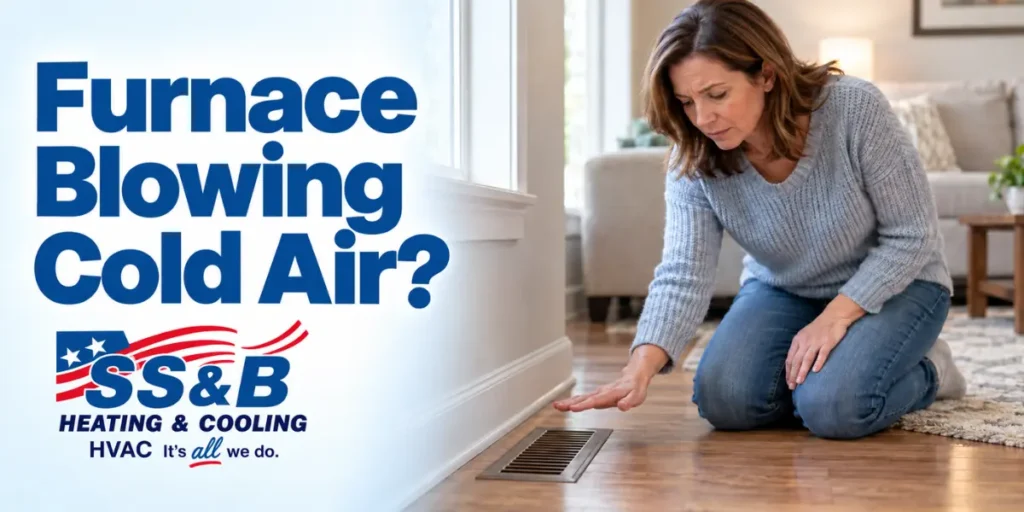
You turn up the thermostat, hear the system start, and expect warm air. Instead, the air coming from the vents feels cool—and your house isn’t getting any warmer.
A furnace blowing cold air does not automatically mean you need a new heating system. The cause could be a thermostat setting, restricted airflow, or a component that needs attention. The first step is to find out why the system is moving air without delivering the heat you expect.
For homeowners in Springfield and the surrounding Ozarks, a few simple observations can help separate normal operation from a problem that needs professional service.
Is the Air Cool Briefly or Throughout the Heating Cycle?
A short period of cooler airflow at the beginning of a heating cycle can happen as air already sitting in the ducts moves into your rooms. The furnace also needs time to warm its heat exchanger before delivering steady heat.
After the burners shut off, the blower usually continues running briefly to move remaining heat out of the furnace. The air may feel less warm toward the end of that period.
What matters is whether warm air follows and your home reaches the thermostat setting. Air that stays cool while the indoor temperature keeps dropping deserves a closer look.
Check the Thermostat’s Fan Setting
Start with the thermostat. Make sure it is set to Heat and the selected temperature is above the current room temperature.
Next, look at the fan setting. On generally keeps the blower running between heating cycles. During those breaks, the system circulates room-temperature air, which can feel cool against your skin.
Switching the fan to Auto generally lets the system control airflow during heating cycles. That can resolve the concern if you were simply feeling air moving while the burners were off. It will not fix a furnace that is failing to produce heat.
If your thermostat uses batteries, check them according to the manufacturer’s instructions.
A Dirty Filter Can Interrupt Heating
A heavily clogged filter can restrict airflow through the furnace. Without enough air moving across the heat exchanger, the equipment may overheat. A safety control can then shut off the burners while the blower continues running to cool the furnace.
From inside your home, that can feel like the heat suddenly turned cold.
Turn the system off before checking or replacing an accessible filter, and follow your equipment’s instructions. Use the correct size and a filter appropriate for your system. Also check that furniture, rugs, and curtains are not blocking return-air grilles or supply registers.
If the furnace continues shutting down or blowing cool air after these checks, it needs service. Repeated overheating should not be treated as normal operation.
The Burners May Not Be Lighting—or Staying Lit
Moving air does not necessarily mean the furnace is producing heat. The blower and the components that start and maintain the flame have different jobs. Our guide to understanding your furnace explains how those parts work together.
An ignition problem can prevent the burners from lighting. A flame-sensing problem can cause the gas to shut off shortly after ignition. Burner or control problems can also interrupt heating.
You might hear repeated attempts to start, notice brief periods of warmth, or find that the house never reaches the set temperature. These observations help a technician, but they do not identify a failed part on their own.
Leave ignition components, gas valves, wiring, and safety controls to a trained professional. Do not bypass a safety switch or repeatedly reset the furnace to keep it running.
Does Every Room Feel the Same?
If only one room has noticeably cooler or weaker airflow, tell your technician. Duct leakage, disconnected ductwork, or airflow distribution problems may affect how much heat reaches individual rooms.
That is a different starting point from a furnace delivering cool air throughout the house. Noticing where the problem happens helps the technician evaluate both the equipment and the air distribution system.
When to Stop Troubleshooting
If you smell gas, leave the home immediately. Avoid operating switches, using a flame, or making calls from inside. Contact your gas utility or emergency services from a safe location.
If a carbon monoxide alarm sounds, get everyone outside and call 911. Do not stay inside to investigate the furnace.
For a continuing no-heat problem without those warning signs, arrange service after checking the thermostat, filter, and accessible vents. Let the technician know when the problem began and whether the air starts warm before turning cool.
Start With a Diagnosis, Not a Replacement Assumption
A furnace blowing cold air is a symptom. Finding its cause should come before deciding whether to repair or replace the equipment.
At SS&B Heating & Cooling, our technicians are not paid on commission. We diagnose the problem, explain what we find, and discuss the repair options before recommending what comes next. If replacement deserves consideration, that conversation should reflect the furnace’s condition, safety, repair needs, and your goals—not simply its age.